Sustainability through Japan’s Natural and Cultural Heritage
In Landscapes in Transition, students study the intersection of landscape, tourism, and culture.
The Program
The Landscapes in Transition: Japan program explores the interconnectedness of cultural and natural heritage and the ways that communities adapt to environmental change, preserve cultural identity, and sustain livelihoods amid demographic and ecological shifts. Students engage with critical global issues such as sustainable development, resilience, conservation, and the challenges of depopulation. This immersive, comparative experience cultivates global awareness, encourages cross-cultural understanding, and equips students to critically analyze how natural and cultural resources can be leveraged to build resilient, equitable, and sustainable futures. By interacting with a variety of stakeholders, including local and international organizations, students will become aware of the array of career paths that could address such problems.
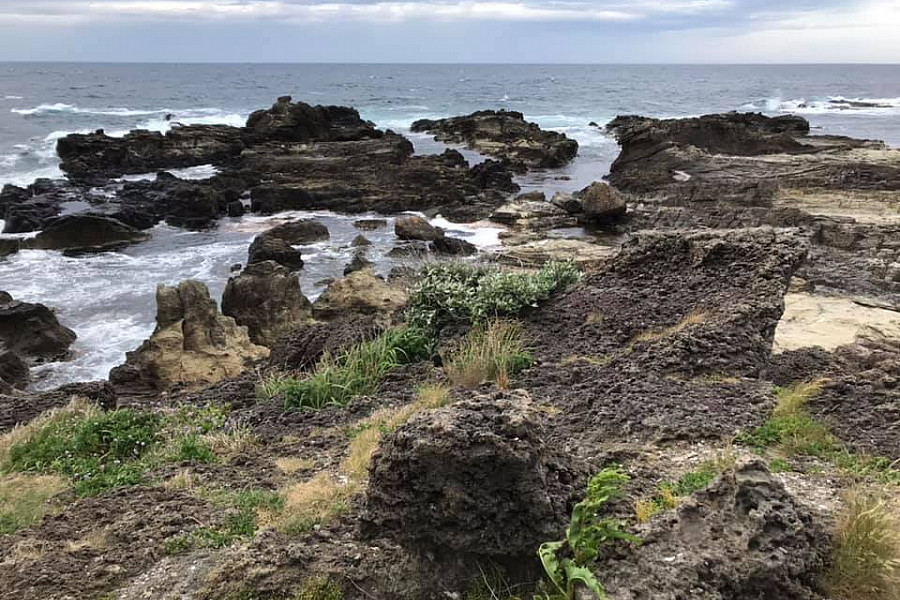
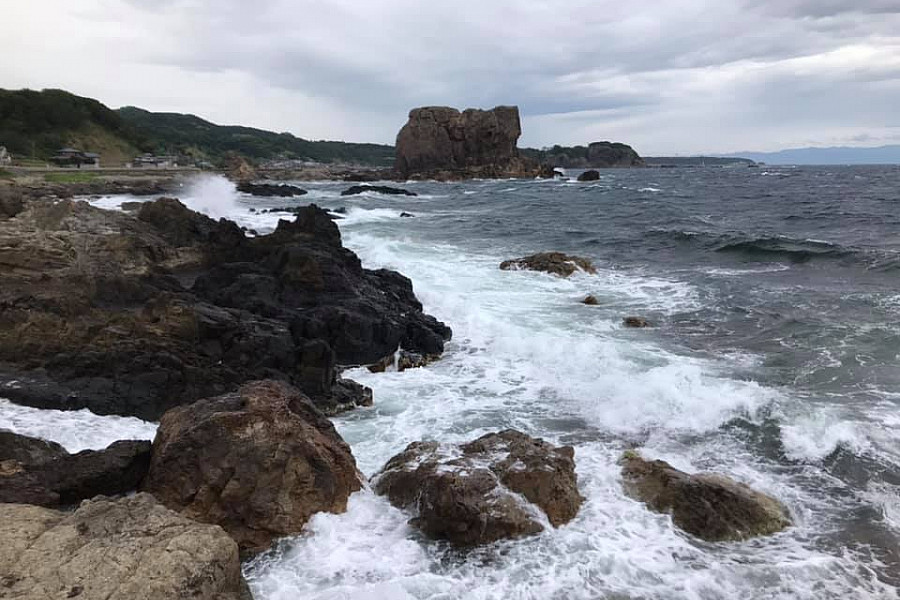
The 2026 program takes students to Kyushu in southwestern Japan, a region rich in cultural heritage and geological heritage. Students will gain first-hand experience in the ways local organizations and governments in Japan leverage natural and cultural resources to facilitate conservation, education, sustainable development and community resilience. They will compare these efforts at sites, including UNESCO World Heritage and UNESCO Global Geopark localities, in both urban settings and rural areas experiencing depopulation and aging. Along the way students will consider how cultural, geological, and biological diversity can be interdependent. Localities include Hirado, Nagasaki, Shimabara Peninsula/Unzen Volcanic Area, and Aso Global Geopark.
This program builds on a strong foundation of past projects. In 2023, Beloit students, guided by the co-directors Susan Furukawa (Japanese) and Jim Rougvie (Geology), explored the intersection between geoheritage and cultural heritage in the Oga Peninsula in order to understand the role that they can play in promoting rural sustainability. Oga is home to the Oga Peninsula-Ogata Geopark, a Japanese National Geopark and the Namahage ritual - recognized by UNESCO as Intangible Cultural Heritage of Humanity. Students investigated geoheritage and the roles governmental departments, tourism associations, and community members play in balancing education, conservation, and economic development goals.
In 2018, students investigated the role of agricultural tourism in maintaining culture and landscapes in Semboku-shi, Akita Prefecture. Through participant observation in farm-home stays, semi-structured interviews with green tourism business owners, and briefings by local government officials, ten students learned how support from various community organizations and increased participation in farm home-stays helps promote rural sustainability.
Details of the 2026 course can be found at https://www.beloit.edu/offices/global-experience/study-abroad/global-experience-seminars/.
Related Courses
To be eligible for field studies, students are encouraged to take one or more of the following courses.
- ECON/ENVS 205, Environmental Economics
- EDYS 276, East Meets West
- EDYS 271, Ecology, Development, and Education
- ENVS 280, Sustainable Cities
- GEOL 100, Earth, Exploring a Dynamic Planet
- GEOL 105, Evolution of the Earth
- GEOL 110, Environmental Geology and Geologic Hazards
- JAPN 260, Japanese Women Writers
- JAPN 260, Modern Japanese Fiction
- JAPN 280, Nightmare Japan
- JAPN/ENVS 296, Totoro Saves the World: Miyazaki, Nature, and the Popular Imagination
- JAPN/ENVS 280, Landscapes in Transition: Japan Orientation, Required for field studies
- POLS/HEAL 230, Comparative Health Systems
- POLS/ENVS 246, Global Political Economy
- POLS/ENVS 257, International Politics of Climate Change
- POLS 255, Global Political Ecology
- SOCI 251, Global Family Issues, spring
- Research Methods course (Departments and semesters vary)
The Field Studies in Japan carry 1 unit of credit.
Language Courses
- JAPN 100, First-Year Japanese I, fall
- JAPN 105, First-Year Japanese II, spring
- JAPN 110, Second-Year Japanese I, fall
- JAPN 115, Second-Year Japanese II, spring
- JAPN 200, Third-Year Japanese I, fall
- JAPN 210, Third-Year Japanese II, spring
- JAPN 215, 220, 230, Fourth-Year Japanese, fall or spring